Top-rated independent appliance repair across the Mid-South
Dryer Tumbles But Stays Cold
If your dryer tumbles but the clothes come out cold and damp, the heat circuit has failed and the motor circuit is fine, and that's a service call we run all over Middle Tennessee. Nothing smells burnt, nothing sparks, and the machine acts like it's doing its job for a full hour. Here's how we work through it, in plain porch talk.
Call (888) 857-9883- Real people on the phone
- 7 days a week
- Quote in writing before any work
Taking calls until 5:00 PM CT
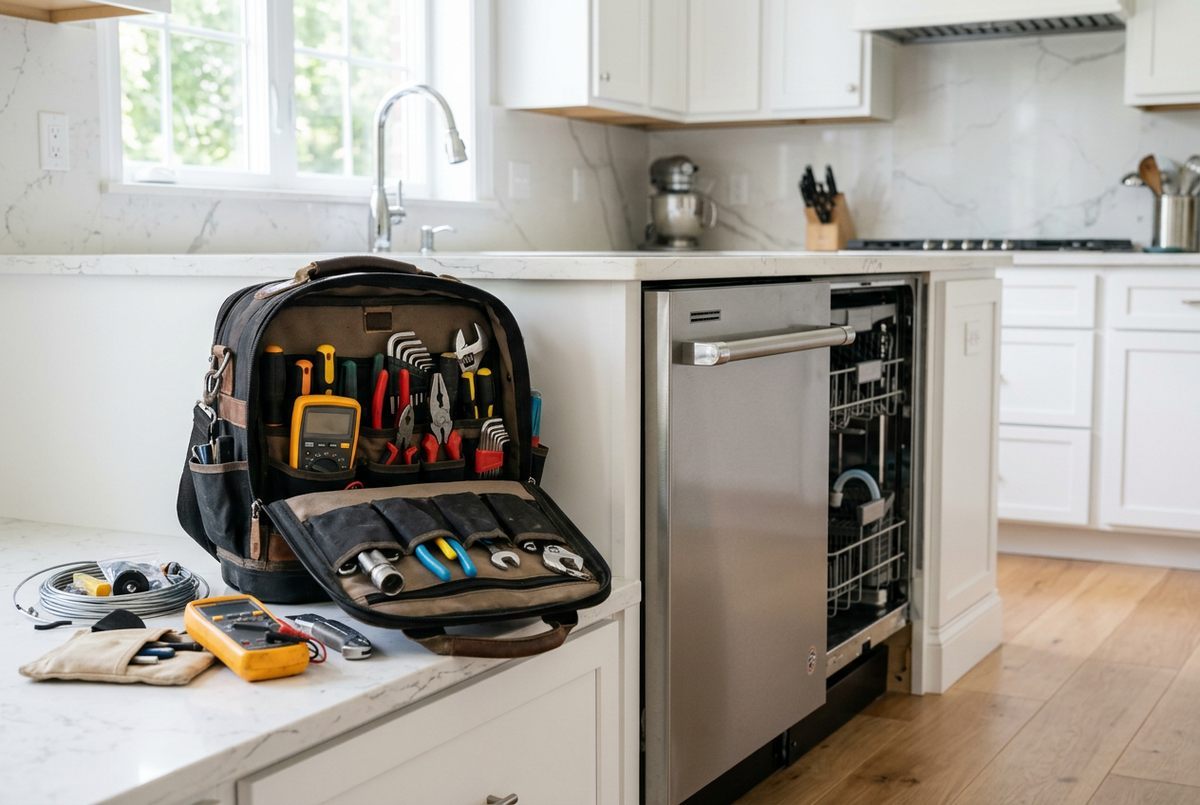
Logan Appliance Repair service team · field-reviewed before publishing
What "runs but no heat" actually tells us
A dryer has two separate jobs. One motor turns the drum, and a different part makes the heat. When the drum spins but the load stays cold, the motor side is fine and the heating side is broken somewhere. That's good news, in a way, because it narrows things down fast. It also means the machine will run all day without drying a thing, running up your power bill and baking wrinkles into your shirts. Damp clothes left tumbling start to smell sour, too. Stop using it for now, hang the load, and read on.
Start with airflow, because it's the cheapest fix
Clogged venting is the first thing we look at. Around here, red clay dust, lint, and dryer sheet residue build up in a hurry, and long vent runs through crawlspaces make it worse. A blocked vent traps hot air, the safety thermostat cuts the heat, and the dryer keeps tumbling cold. Signs point that way when the outside vent hood barely puffs, or the top of the dryer feels hot, or a load takes three cycles. Pull the lint screen and rinse it. Check the outside flap while the dryer runs, and if the air is weak or absent, airflow is your suspect.
Heating parts and safety switches
If airflow checks out, we move to the heat circuit itself. On electric dryers that means the heating element, a cycling thermostat, and one or more thermal fuses. On gas dryers it's the igniter, flame sensor, and gas valve coils. These parts fail closed or open, and a tripped thermal fuse kills the heat while the drum keeps spinning. Storm season adds another wrinkle. A power surge can knock out a control board or half the incoming power, so an electric dryer runs on one leg and never heats. All of this sits behind panels or near gas lines. Leave it to us.
Safe checks you can do in five minutes
Clean the lint screen and hold it under running water. If water beads on top instead of passing through, softener film is choking it. Pull the dryer out a foot and look at the flex hose for crushes or kinks. Walk outside and put your hand at the vent hood mid-cycle. Reset the breaker once, fully off then on. And make sure the cycle isn't set to Air Fluff or another no-heat setting, which happens more than folks expect. That's the whole safe list. Don't open panels, don't touch gas connections, and don't test parts with tools you weren't trained on. Then call us.
What we do differently on the visit
We measure instead of guess. We check voltage at the outlet on both legs, since a lost leg mimics a dead element. We test each thermostat and fuse for continuity, look at the element for a break or a short to the housing, and read airflow through the whole vent run rather than eyeballing the flap. On gas units we watch the igniter glow and the flame light, then confirm the valve coils hold. We also find the cause of the failure, not only the failed part, because a blocked vent will cook a new fuse in weeks. We repair all major brands as an independent shop. Call us and tell us what you're seeing.
Dryer Tumbles But Stays Cold — common questions
Can I keep using the dryer until you get here?
We'd rather you didn't. If a safety device tripped, something upstream is wrong. Running it over and over stresses parts and wastes power. Hang the wet load and unplug the dryer, or shut the breaker off, until we look.
Would a bad breaker cause this?
It can. Electric dryers use two 120-volt legs. If one trips or a breaker weakens, the drum still turns but the element gets nothing. Flip the breaker off and back on once. If the heat doesn't return, call us.
How often should the vent be cleaned?
Once a year is a fair rule for most homes, sooner with long runs, pets, or a crawlspace path that collects clay dust. If drying times start creeping up, that's your reminder no matter what the calendar says.
How it works
- Step 1
Tell us the symptom
Call us or fill out the form and tell us what you hear, smell, or see. Buzzing, leaking, no heat. Plain talk is fine. We'll ask a few questions and set a visit window.
- Step 2
We come look
A technician shows up in the window, pulls the unit out, and tests it. No guessing games. We explain what failed and why, in words that make sense on your back porch.
- Step 3
We fix it
Common parts ride with us, so a lot of repairs finish on that first visit. If a part has to be ordered, we tell you plainly and set the return date before we pull out of your driveway.
- A real person answers
- Open 7 days
- Written quote before work starts
Why homeowners call us
- Storm-season surge damageLightning and blinking power hurt control boards. You get an oven that lights up but won't heat, or a washer that quits mid-cycle. We test boards and wiring before we replace anything, so you know what the surge actually took out.
- Clay dust and lintRed clay dust and lint choke dryer vents and condenser coils. That's where long dry times and a hot laundry room come from, and it's why a fridge runs nonstop. We check airflow every visit, because a clogged vent kills a good machine slowly.
- Straight talk, no runaroundWe tell you what's wrong and what it takes to fix. If a machine is worn past sense, we say that too, and you decide. No pressure and no jargon. We don't dress up an upsell as advice.
- Independent and localWe're a Nashville crew, not a call center. As an independent shop we repair all major brands. Call us and you get a real person, somebody who knows the roads we drive.
- All major brands, gas & electricIndependent service on Whirlpool, LG, Samsung, GE, Maytag, Bosch, KitchenAid and the rest.
- Straight answersNot worth fixing? We say that out loud, and often it saves you the visit fee.
About this guide
Past the safe checks, it's a job for tools and a meter
Describe what you found and we'll take it from there. Booking takes about a minute.
- A real person answers
- Open 7 days
- Written quotes
- All major brands
- Gas & electric
Rather not call? Get a free quote →