Top-rated independent appliance repair across the Mid-South
Oven Running Hot or Cold
Temperature drift is one of the most common calls we take, and it rarely means the oven is finished. It usually means one part has quit reading the heat right. Cookies burn on the bottom in nine minutes, or the casserole sits pale after an hour, while the dial still says 350. Call us and we'll sort it out.
Call (888) 857-9883- Real people on the phone
- 7 days a week
- Quote in writing before any work
Taking calls until 5:00 PM CT
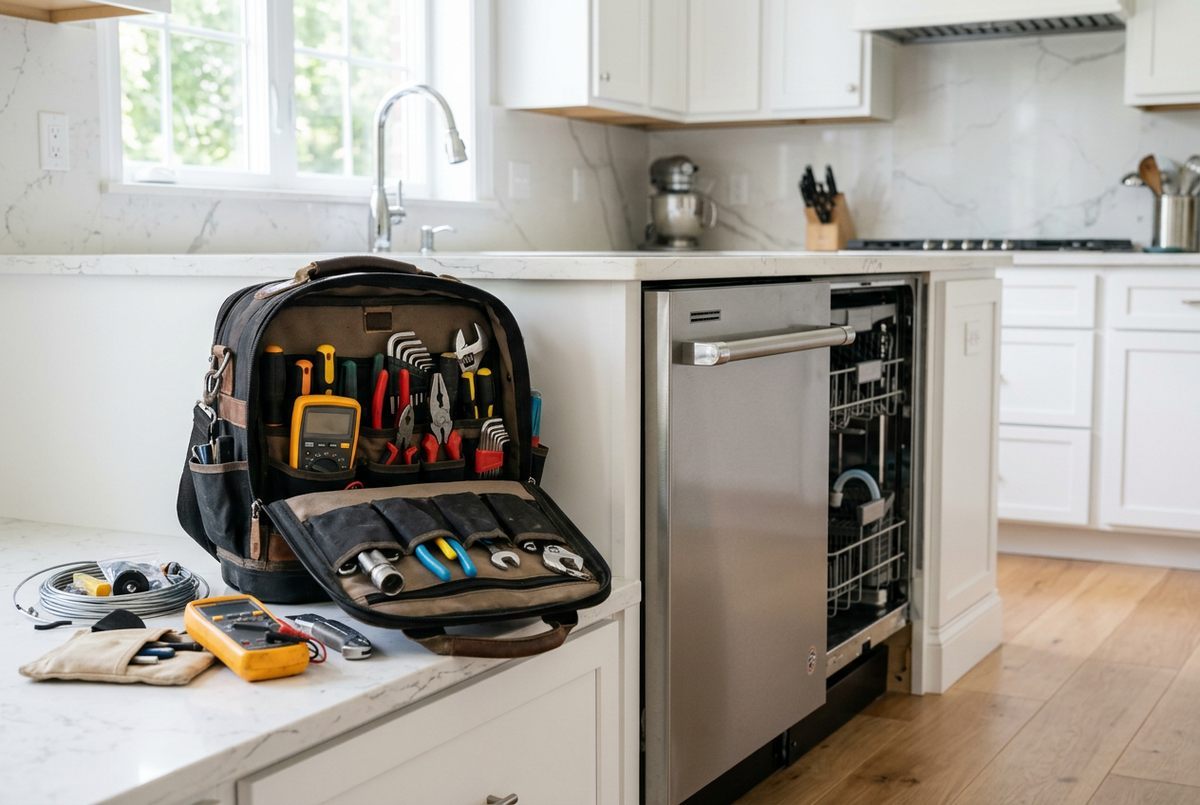
Logan Appliance Repair service team · field-reviewed before publishing
What "running hot or cold" actually means
An oven doesn't hold one steady number. It swings above and below the setting on purpose, cycling the heat on and off, and what you feel as "wrong" is when that swing centers on the wrong point. Twenty-five degrees off is normal drift. Fifty or more, and something is measuring or heating badly. Pay attention to the pattern. Hot all the time points one direction, cold all the time points another, and uneven baking with one side scorched usually points at airflow or a weak element. Write down what you see before you call. It shortens the visit.
Start with calibration and habits
The cheapest fix is no fix at all. Most ovens let you shift the calibration a few degrees in the settings menu, and your owner's manual explains how, so do that before anything else. Then look at how you bake. A dark pan browns faster than a shiny one, and a rack shoved too high puts food right under the broiler zone. Peeking every four minutes dumps heat out the door. That pizza stone you leave inside full-time changes how the whole cavity heats, too. Try one baked item on the middle rack, in a light pan, door closed, and see what happens.
The door, the gasket, and the seal
Heat escapes where it can. Run your hand around the closed oven door while it's preheating and feel for a warm draft along the edges. Then look at the rubber or braided gasket that rims the opening. If it's cracked, flattened, torn away at a corner, or missing a section, the oven bleeds heat and never catches up. Also check whether the door closes flush. A sagging hinge leaves a gap at the top that you can see with a flashlight. Gaskets and hinges are common wear parts. They're a real repair, not a lost cause, and they change baking results right away.
Sensors, elements, and control boards
Inside most electric ovens is a thin metal probe near the top-back wall. That's the temperature sensor. When it drifts out of range, the oven chases the wrong number and stays hot or cold no matter what you set. A weak bake element is another cause. It may glow in spots, look blistered, or heat the top of the food while the bottom stays raw. Control boards fail too, and storm-season power surges around here are hard on them. A surge can leave the board reading fine but commanding wrong. Diagnosis matters, since these causes look the same from the kitchen.
What a homeowner can safely check, and where we take over
Here's what's safe for you. Put an oven thermometer on the middle rack, preheat twenty minutes, and read it three times over half an hour. Inspect the gasket, test the door for gaps, adjust calibration per the manual, and clear crumbs from the cavity floor. Stop there. Do not pull the back panel, unplug and probe wiring, or touch anything on a gas oven's burner assembly. We arrive with a meter and read the sensor's resistance against the temperature chart, check the element's continuity, and watch the board's cycling behavior through a full preheat. Independent shop, all major brands. Reach us.
Oven Running Hot or Cold — common questions
How far off is too far off?
Within about 25 degrees of the setting is normal cycling. Consistently 50 degrees or more off, either direction, is worth a look. Use an oven thermometer on the middle rack to measure it, not guesswork.
Will the self-clean cycle fix temperature problems?
No. Self-clean burns off spills at very high heat and does nothing for calibration. On some ovens that heat stresses the sensor and control board, so we'd rather diagnose the drift first.
Can a power outage change my oven's temperature?
It can. Surges when power returns are hard on control boards, and a damaged board may command heat incorrectly while still lighting up normally. Storm-related failures are a regular call for us.
How it works
- Step 1
Tell us the symptom
Call us or fill out the form and tell us what you hear, smell, or see. Buzzing, leaking, no heat. Plain talk is fine. We'll ask a few questions and set a visit window.
- Step 2
We come look
A technician shows up in the window, pulls the unit out, and tests it. No guessing games. We explain what failed and why, in words that make sense on your back porch.
- Step 3
We fix it
Common parts ride with us, so a lot of repairs finish on that first visit. If a part has to be ordered, we tell you plainly and set the return date before we pull out of your driveway.
- A real person answers
- Open 7 days
- Written quote before work starts
Why homeowners call us
- Storm-season surge damageLightning and blinking power hurt control boards. You get an oven that lights up but won't heat, or a washer that quits mid-cycle. We test boards and wiring before we replace anything, so you know what the surge actually took out.
- Clay dust and lintRed clay dust and lint choke dryer vents and condenser coils. That's where long dry times and a hot laundry room come from, and it's why a fridge runs nonstop. We check airflow every visit, because a clogged vent kills a good machine slowly.
- Straight talk, no runaroundWe tell you what's wrong and what it takes to fix. If a machine is worn past sense, we say that too, and you decide. No pressure and no jargon. We don't dress up an upsell as advice.
- Independent and localWe're a Nashville crew, not a call center. As an independent shop we repair all major brands. Call us and you get a real person, somebody who knows the roads we drive.
- All major brands, gas & electricIndependent service on Whirlpool, LG, Samsung, GE, Maytag, Bosch, KitchenAid and the rest.
- Straight answersNot worth fixing? We say that out loud, and often it saves you the visit fee.
About this guide
If the safe checks didn't fix it, the fault is real
Bring your notes from the checks to the call and booking takes no time.
- A real person answers
- Open 7 days
- Written quotes
- All major brands
- Gas & electric
Rather not call? Get a free quote →