Top-rated independent appliance repair across the Mid-South
Fixable Freezer Faults, and the Ones That End a Freezer
Whether to fix or replace a dead freezer comes down to three things we check on site: how old the box is, what actually failed, and whether the part still exists. Your deep freezer might be humming along with soft ice cream inside, or the chest freezer in the garage went quiet as a stump. Either way, you've got a hundred pounds of venison and a decision to make. Call us and we'll sort it out before you spend a dime either direction.
Call (888) 857-9883- Real people on the phone
- 7 days a week
- Quote in writing before any work
Taking calls until 5:00 PM CT
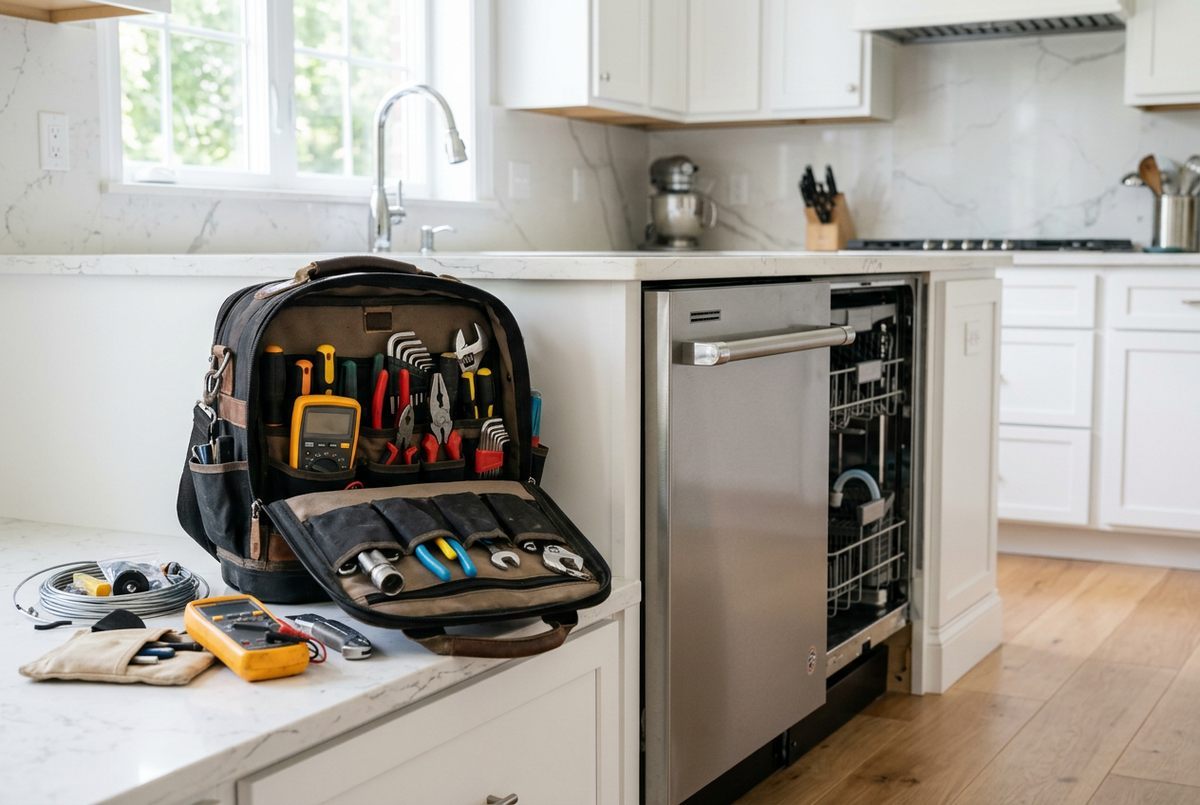
Logan Appliance Repair service team · field-reviewed before publishing
Age matters, but it isn't the whole story
A freezer under ten years old is usually worth fixing. Past fifteen, we look harder. Chest freezers are simple machines, so plenty of old ones keep running long after a fancy fridge would quit. Uprights with frost-free systems have more parts to go wrong: defrost heaters, timers, thermostats, fans. That's not bad news, though. Those parts are common and they swap out clean. What worries us is a sealed system leak on an old cabinet, or rusted-through walls where the insulation has soaked up water. Rust working from the inside out tells us the box itself is done, no matter how good the compressor sounds.
The fault type tells you almost everything
Some failures are routine. A bad start relay, a stuck defrost thermostat, a torn door gasket, a burned-out evaporator fan, a control board fried by a storm surge. We see surge damage constantly around here once the spring thunderstorms start rolling through. Those repairs have a clear beginning and end. Other faults sit on the far side of the line. A refrigerant leak in the buried tubing, or a compressor that's locked up mechanically, means major surgery on a sealed system. On an older cabinet, that math rarely works out. We'll tell you which side of the line you're on.
Can we still get the part
This is the quiet dealbreaker. A fixable fault on a freezer with no parts left in the supply chain is still a dead freezer. Manufacturers stop making components for discontinued models. Sometimes we find a decent aftermarket equivalent. Sometimes there's nothing out there but a used board off a salvage unit, and we won't hang your food on that. When we diagnose, we check availability before we recommend anything. If the part exists and ships in a reasonable window, we say so. If it doesn't, we say that too, and you can stop wondering.
What we actually do on the visit
We start with the boring stuff, because the boring stuff is often the answer. Is it plugged into a live outlet? Did a breaker trip? Did somebody bump the dial off setting? Is the door gasket sealing, or is warm garage air sneaking in and frosting the coils solid? Then we check the temperature at the walls, listen to the compressor, and look at airflow. Frost caked on one wall says something different than frost everywhere. From there we test components. When we're done, you get a straight description of the fault, the part it needs, and our honest read on whether fixing it makes sense.
When we tell you to buy a new one
We say it more often than folks expect. Sealed system failure on a fifteen-year-old upright. A cabinet with rust holes or waterlogged insulation that will never hold temperature again. A model where the control board simply isn't made anymore, or two or three separate failures stacked up at once. Also this: if a freezer has been running warm for weeks and the food already thawed and refroze, throw the food out no matter what we do to the machine. We'd rather lose the repair and keep your trust. Call us and we'll give you the real answer either way.
When it is time to book
Related guides
Fixable Freezer Faults, and the Ones That End a Freezer — common questions
My chest freezer runs but won't get cold. Bad sign?
Not necessarily. A running compressor with poor cooling can mean a frosted coil, a failed fan, or a bad thermostat, and those are all normal repairs. It can also mean low refrigerant. Diagnosis tells us which.
Is a garage freezer harder on the machine?
Yes. Heat and humidity in summer make it work harder, and cold snaps can confuse some models. Keep the coils clean, leave clearance around it, and check the door seal each season.
A storm knocked out power and now it won't start. What happened?
Surges commonly take out control boards and start relays. Unplug it, wait a bit, then plug it back in. If it stays dead, that's usually an electrical component we can test and replace.
How it works
- Step 1
Tell us the symptom
Call us or fill out the form and tell us what you hear, smell, or see. Buzzing, leaking, no heat. Plain talk is fine. We'll ask a few questions and set a visit window.
- Step 2
We come look
A technician shows up in the window, pulls the unit out, and tests it. No guessing games. We explain what failed and why, in words that make sense on your back porch.
- Step 3
We fix it
Common parts ride with us, so a lot of repairs finish on that first visit. If a part has to be ordered, we tell you plainly and set the return date before we pull out of your driveway.
- A real person answers
- Open 7 days
- Written quote before work starts
Why homeowners call us
- Storm-season surge damageLightning and blinking power hurt control boards. You get an oven that lights up but won't heat, or a washer that quits mid-cycle. We test boards and wiring before we replace anything, so you know what the surge actually took out.
- Clay dust and lintRed clay dust and lint choke dryer vents and condenser coils. That's where long dry times and a hot laundry room come from, and it's why a fridge runs nonstop. We check airflow every visit, because a clogged vent kills a good machine slowly.
- Straight talk, no runaroundWe tell you what's wrong and what it takes to fix. If a machine is worn past sense, we say that too, and you decide. No pressure and no jargon. We don't dress up an upsell as advice.
- Independent and localWe're a Nashville crew, not a call center. As an independent shop we repair all major brands. Call us and you get a real person, somebody who knows the roads we drive.
- All major brands, gas & electricIndependent service on Whirlpool, LG, Samsung, GE, Maytag, Bosch, KitchenAid and the rest.
- Straight answersNot worth fixing? We say that out loud, and often it saves you the visit fee.
About this guide
Checked everything on the list and it still acts up?
Bring your notes from the checks to the call and booking takes no time.
- A real person answers
- Open 7 days
- Written quotes
- All major brands
- Gas & electric
Rather not call? Get a free quote →