Top-rated independent appliance repair across the Mid-South
Refrigerator Not Cooling
The milk tastes off. The freezer still feels cold, but the fridge side is barely cool. Maybe the whole box went warm overnight after a storm knocked the power out. You're standing there with the door open, wondering if the food is safe and what this is going to take. Here's what we look at, in plain terms.
Call (888) 857-9883- Real people on the phone
- 7 days a week
- Quote in writing before any work
Taking calls until 5:00 PM CT
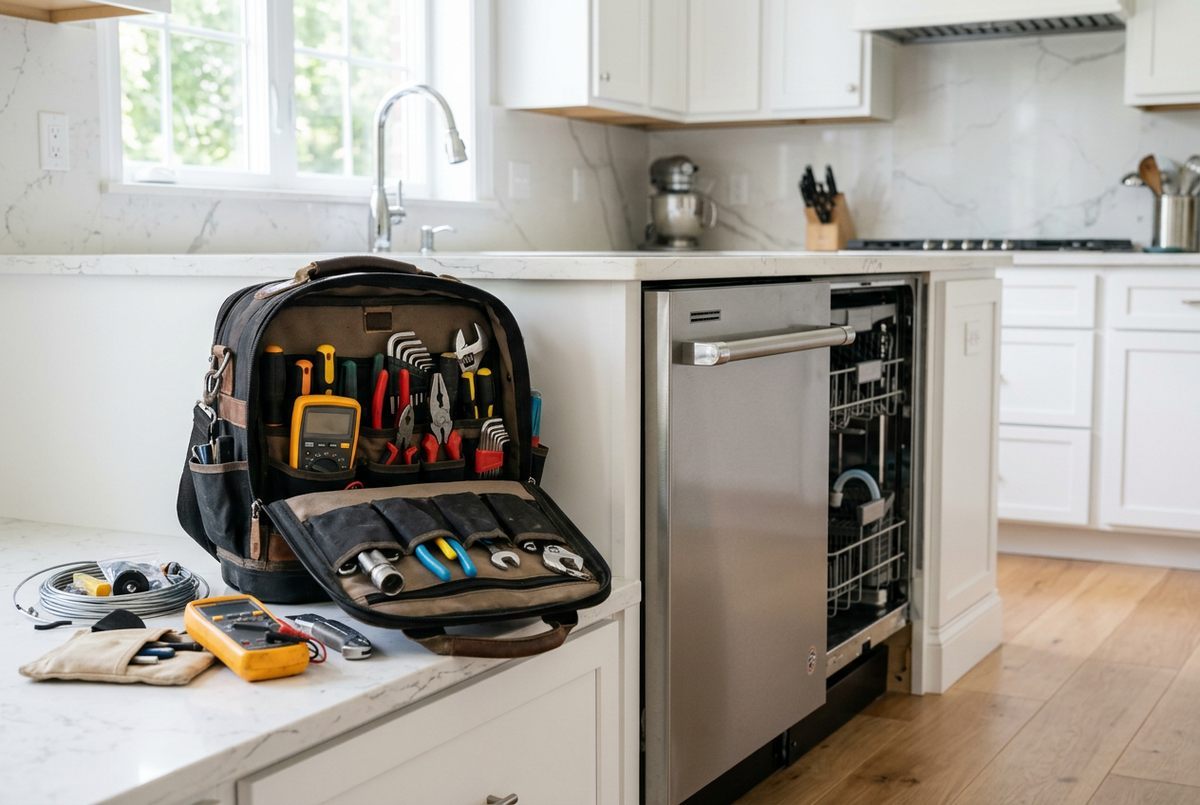
Logan Appliance Repair service team · field-reviewed before publishing
What "not cooling" usually tells us
A fridge doesn't make cold. It moves heat out. One set of coils gets cold, a fan blows air over them, and that air gets split between the freezer and the fresh food side. So the pattern matters more than the temperature. Freezer cold but fridge warm usually points to airflow or defrost trouble. Both sides warm points further back, toward the sealed system or the compressor circuit. Warm with everything running loud and constant is different from warm and dead silent. Note which one you have before you call. It saves time on the phone and helps us bring the right parts.
Start with the cheap stuff: air, dust, and doors
Packed shelves block the vents inside. If food is jammed against the back wall of the fresh food compartment, cold air can't circulate. Same story with a stuffed freezer. Outside, the condenser coils under or behind the unit collect dust. Around here that means clay dust, pet hair, and whatever tracks in off a gravel drive. Caked coils can't dump heat, so the box runs and runs and never gets cold. Door gaskets matter too. A torn or flattened seal lets humid room air pour in. Check for a gap you can see light through, or a spot where the door doesn't suck shut.
Frost and defrost problems
Most fridges frost the cold coil a little every cycle, then melt it off on a timer or sensor. When that defrost cycle quits, frost builds into a solid block. The fan can't push air through ice. You get a freezer that's still cold and a fridge that creeps up into the 50s. Signs to look for: a sheet of ice on the freezer's back wall, water pooling under the crisper drawers, or a fan that sounds like it's hitting something. This family of failures covers heaters, sensors, thermostats, and control boards. It's diagnosed, not guessed, and it lives behind a panel, leave that part to us.
Compressor, fans, and storm damage
If the fridge is silent and warm, or humming and clicking off every minute, the problem may be the compressor circuit or its start components. Storm season is hard on these. A surge or brownout can take out a control board or a compressor's start device while leaving the light bulb working fine, which fools a lot of folks. Sealed system issues, refrigerant leaks and blockages, sit in this group too. You'll hear a unit run nonstop with coils that never get cold or frost in one small patch. None of this is homeowner territory. It involves stored electrical charge and sealed refrigerant lines.
Safe checks you can do right now
Confirm power. Is the light on? Try another item in that outlet. Check the breaker. If the fridge is on a GFCI, look for a tripped button. Set the fridge dial mid-range and give it a few hours; someone may have bumped it. Pull the unit out and vacuum the coils and the grille. Feel the gasket for cold air leaking out. Make sure the doors close on their own and nothing on a shelf holds them ajar. Listen: fan noise, compressor hum, or silence. Then stop. Don't remove interior panels or the back cover. Call us with what you found and we'll pick it up from there.
What we do that's different
We put meters on it. Temperature readings at the vents and inside both compartments tell us where the cold is going. We check current draw on the compressor, resistance on defrost heaters and sensors, and voltage at the boards. We watch the unit through a full cycle instead of taking one snapshot. Sealed system work needs recovery equipment and specific tools, and we're set up for it. We repair all major brands as an independent shop, so we're not steering you toward one maker's parts. And we'll tell you straight when a repair doesn't make sense on an old box.
Refrigerator Not Cooling — common questions
How long should I wait before calling?
If it's been warm more than four hours with power on, call. Food safety runs out fast. Move perishables to a cooler now, then reach us so we can get you on the schedule.
Why is my freezer fine but the fridge warm?
They share one cold coil and one fan. When airflow to the fresh food side is blocked by frost, a failed fan, or a stuck damper, the freezer keeps its cold and the fridge doesn't.
Can a power outage really break a refrigerator?
Yes. The surge when power returns is harder on electronics than the outage itself. Control boards and compressor start components fail this way. A surge protector rated for appliances helps going forward.
How it works
- Step 1
Tell us the symptom
Call us or fill out the form and tell us what you hear, smell, or see. Buzzing, leaking, no heat. Plain talk is fine. We'll ask a few questions and set a visit window.
- Step 2
We come look
A technician shows up in the window, pulls the unit out, and tests it. No guessing games. We explain what failed and why, in words that make sense on your back porch.
- Step 3
We fix it
Common parts ride with us, so a lot of repairs finish on that first visit. If a part has to be ordered, we tell you plainly and set the return date before we pull out of your driveway.
- A real person answers
- Open 7 days
- Written quote before work starts
Why homeowners call us
- Storm-season surge damageLightning and blinking power hurt control boards. You get an oven that lights up but won't heat, or a washer that quits mid-cycle. We test boards and wiring before we replace anything, so you know what the surge actually took out.
- Clay dust and lintRed clay dust and lint choke dryer vents and condenser coils. That's where long dry times and a hot laundry room come from, and it's why a fridge runs nonstop. We check airflow every visit, because a clogged vent kills a good machine slowly.
- Straight talk, no runaroundWe tell you what's wrong and what it takes to fix. If a machine is worn past sense, we say that too, and you decide. No pressure and no jargon. We don't dress up an upsell as advice.
- Independent and localWe're a Nashville crew, not a call center. As an independent shop we repair all major brands. Call us and you get a real person, somebody who knows the roads we drive.
- All major brands, gas & electricIndependent service on Whirlpool, LG, Samsung, GE, Maytag, Bosch, KitchenAid and the rest.
- Straight answersNot worth fixing? We say that out loud, and often it saves you the visit fee.
About this guide
If the safe checks didn't fix it, the fault is real
Tell us what you tried and what it did. The booking itself takes a minute.
- A real person answers
- Open 7 days
- Written quotes
- All major brands
- Gas & electric
Rather not call? Get a free quote →