Top-rated independent appliance repair across the Mid-South
Condenser Coils
If your fridge is running loud and the freezer is getting soft, start by unplugging it and looking at the condenser coils underneath. Nine times out of ten that's where we find the trouble: a gray blanket of dust and pet hair packed on tight. Nothing has failed yet. The kitchen just feels warm down low and the ice cream won't hold.
Call (888) 857-9883- Real people on the phone
- 7 days a week
- Quote in writing before any work
Taking calls until 5:00 PM CT
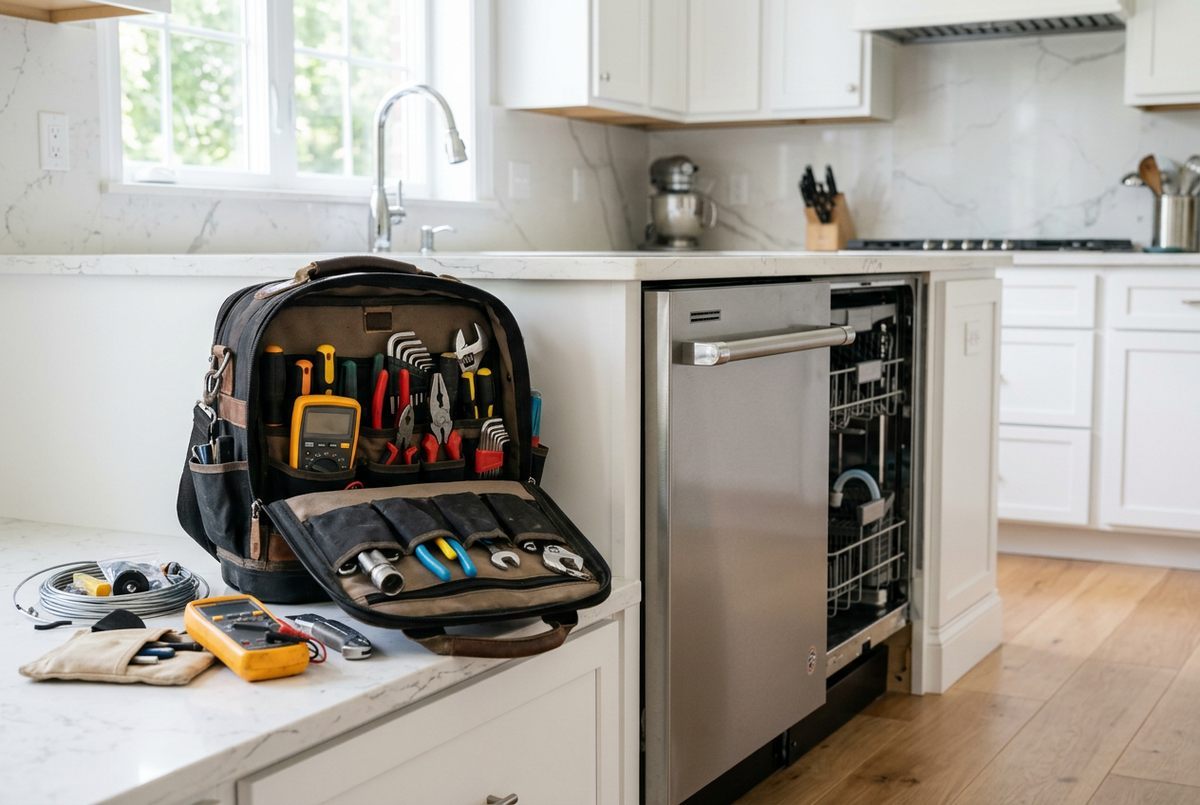
Logan Appliance Repair service team · field-reviewed before publishing
What dust on the coils actually does
Condenser coils dump heat out of your fridge, and that's their whole job. When clay dust, lint, and dog hair mat onto them, the heat has nowhere to go. So the compressor keeps running to make up the difference, longer and longer, until it's running almost constantly. You pay for that twice. The food side drifts warmer, the freezer worst of all, and the compressor and condenser fan motor sit in heat they were never built to hold. Parts that ought to last years start acting up. We've pulled failed fan motors and cooked compressors that started as nothing more than a dirty coil nobody ever looked at.
The five-minute habit
Unplug the refrigerator first. That's not optional. Then pull it out from the wall far enough to get behind it, or pop off the toe-kick grille at the floor if your coils live underneath. Use a vacuum with a crevice tool and a long skinny coil brush from the hardware store. Brush loose, vacuum up, and go gentle. Coil fins bend easy, and a bent fin blocks airflow the same as dust does. Get the floor under the fridge while you're down there. Wipe the condenser fan blade if you can reach it without taking anything apart. Slide it back, plug it in, done.
How often, and what changes the answer
Twice a year is a fair baseline for most homes. Spring and fall, when you're already swapping HVAC filters, is easy to remember. Some houses need more than that. Shedding dogs or cats push you to every three months, and so does a gravel driveway or a house sitting on red clay, where fine grit rides in on shoes and settles low. Carpet near the kitchen sheds fibers right into the coil. Country homes with a dirt road out front are the worst we see. If you pull the grille and it's clean, good. You bought yourself some confidence and lost five minutes.
Signs prevention time has passed
Watch for a compressor that runs nonstop with no quiet stretches. A fridge is supposed to cycle off. If yours never does, heat isn't getting out. Other red flags: the cabinet feels hot to the touch near the bottom or the sides. Ice cream stays soft while the milk stays cold. A click every few minutes, then silence. A puddle, or that smell of hot dust. By then cleaning may help some, but usually something has already given out. A start relay, a fan motor, a control board. Storm-season surges around here finish off parts that were already cooking under a dirty coil. Call us and describe the sound you're hearing.
What we check when we come out
We start where you can't safely go. Temperature readings in both compartments, then the condenser fan, the compressor start components, and the defrost system. Dirty coils and a failing defrost heater look the same from the kitchen, since both hand you a warm fridge and a compressor that never rests. We work on all major brands as an independent shop, so we're not steering you toward one outcome. Sometimes the honest answer is the unit has age on it and a big repair doesn't pencil out. We'll say so plainly and let you decide. Reach us and we'll set a time.
Condenser Coils — common questions
Where are my condenser coils?
Most newer refrigerators keep them underneath, behind a snap-off grille down at the floor. Older units often have a black grid mounted flat on the back. Unplug the fridge, then look in both spots.
Can I use compressed air instead of a vacuum?
You can, but it blows dust into the room and right back into the coil. A vacuum with a crevice tool pulls the debris out instead. If you do use air, pull the fridge well away from the wall first.
Will cleaning the coils fix a fridge that's already warm?
Sometimes, if dust was the only problem. Give it 24 hours after cleaning and recheck your temperatures. Still warm, or the compressor never cycles off? Something else failed. Call us.
How it works
- Step 1
Tell us the symptom
Call us or fill out the form and tell us what you hear, smell, or see. Buzzing, leaking, no heat. Plain talk is fine. We'll ask a few questions and set a visit window.
- Step 2
We come look
A technician shows up in the window, pulls the unit out, and tests it. No guessing games. We explain what failed and why, in words that make sense on your back porch.
- Step 3
We fix it
Common parts ride with us, so a lot of repairs finish on that first visit. If a part has to be ordered, we tell you plainly and set the return date before we pull out of your driveway.
- A real person answers
- Open 7 days
- Written quote before work starts
Why homeowners call us
- Storm-season surge damageLightning and blinking power hurt control boards. You get an oven that lights up but won't heat, or a washer that quits mid-cycle. We test boards and wiring before we replace anything, so you know what the surge actually took out.
- Clay dust and lintRed clay dust and lint choke dryer vents and condenser coils. That's where long dry times and a hot laundry room come from, and it's why a fridge runs nonstop. We check airflow every visit, because a clogged vent kills a good machine slowly.
- Straight talk, no runaroundWe tell you what's wrong and what it takes to fix. If a machine is worn past sense, we say that too, and you decide. No pressure and no jargon. We don't dress up an upsell as advice.
- Independent and localWe're a Nashville crew, not a call center. As an independent shop we repair all major brands. Call us and you get a real person, somebody who knows the roads we drive.
- All major brands, gas & electricIndependent service on Whirlpool, LG, Samsung, GE, Maytag, Bosch, KitchenAid and the rest.
- Straight answersNot worth fixing? We say that out loud, and often it saves you the visit fee.
About this guide
If the safe checks didn't fix it, the fault is real
Report what you saw during the checks and we handle the rest. A minute to book.
- A real person answers
- Open 7 days
- Written quotes
- All major brands
- Gas & electric
Rather not call? Get a free quote →